Player ratings and Man of the Match for your weekly game
Written on
Ask anyone who plays every week and they can tell you who was best on the pitch last Thursday. Making it official, with ratings and a Man of the Match, costs two minutes and gives the game something to talk about until the next one. Done badly, it also starts arguments. Here is how to do it well.
Why bother rating a kickabout?
- It gives the game a memory. A score and a name are what people remember a month later.
- It rewards the quiet work. Goals get noticed anyway. A vote is the one moment the defender and the keeper get theirs.
- It brings people back. A player who was a vote short of Man of the Match tends to turn up the following week.
Rules that keep it friendly
Everyone who played votes
A rating from one person is an opinion. A rating from the whole game is a result. Let every player rate the others, and nobody rates themselves.
Vote straight after the game
Memory fades quickly. Open the vote at the final whistle and close it soon after, while people are still in the changing room or on the way home. A short window also means the result arrives the same evening.
Use a simple scale
Marks out of 10 are understood by everyone who has ever read a match report. Agree what the middle means: 6 is a normal game, 8 is a very good one, 10 is the night people will still mention next year.
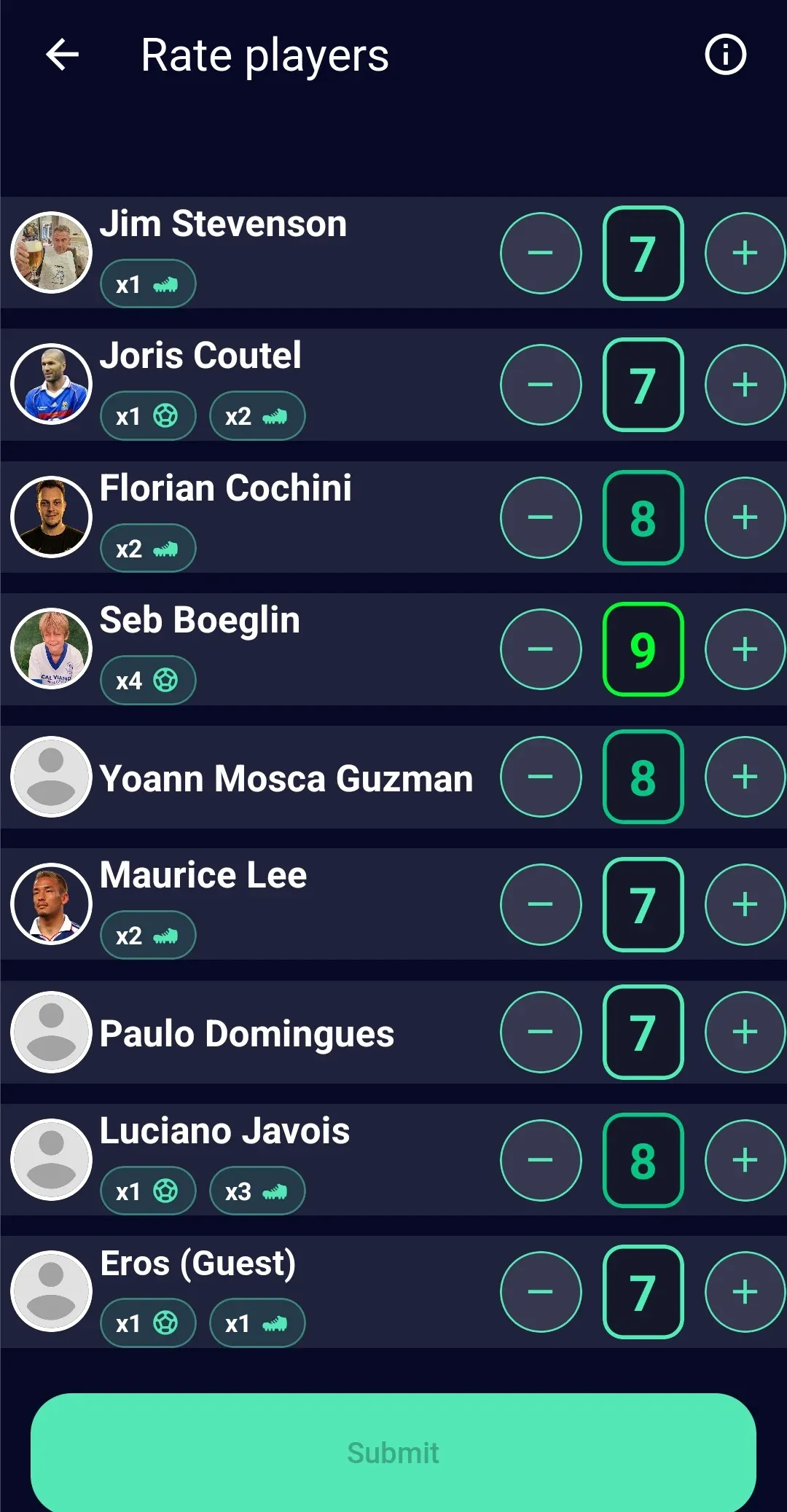
One Man of the Match, by votes
Keep it to one vote per player and one winner. The player with the most votes takes it.
Add awards that are not about goals
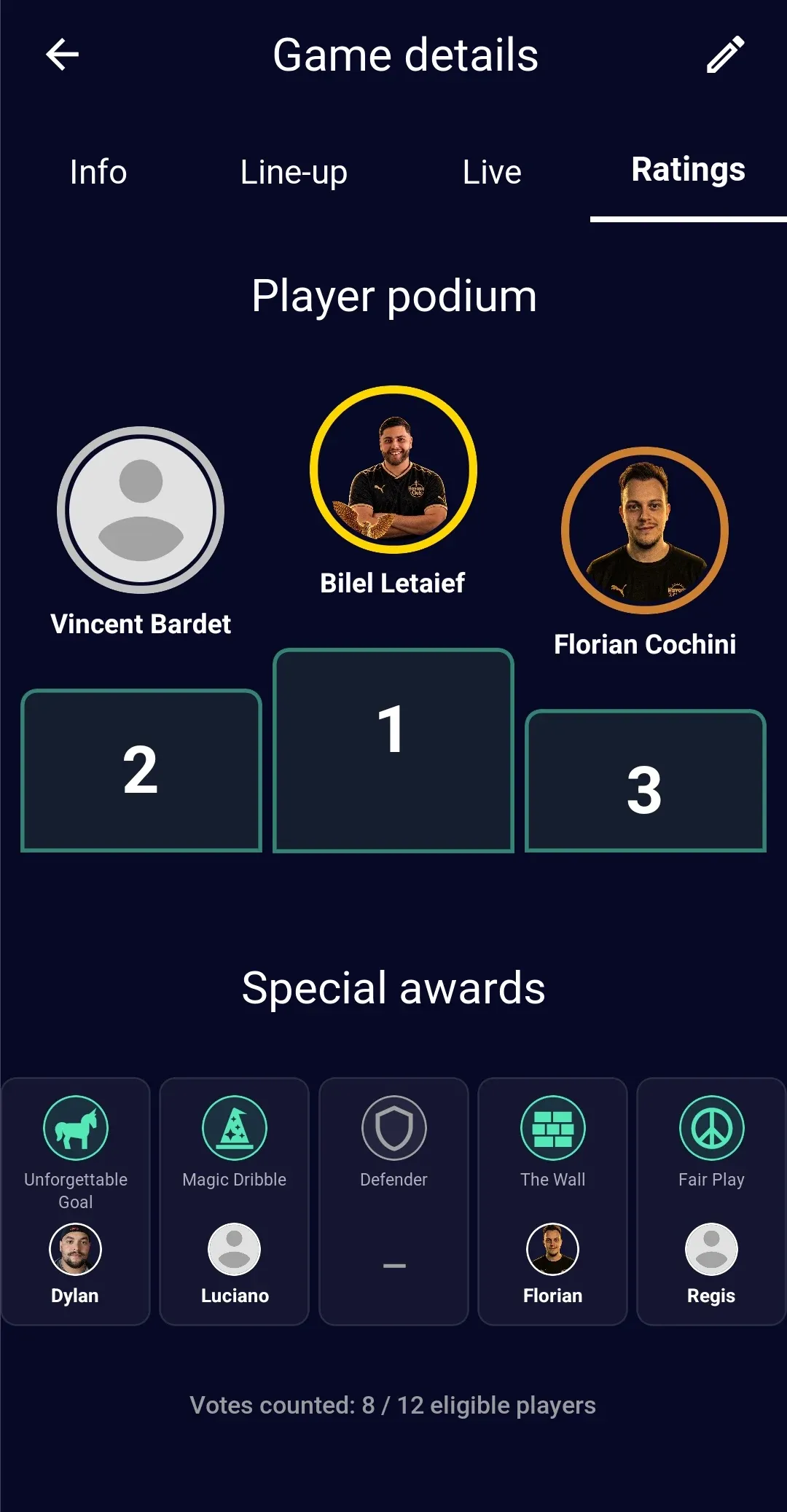
A best goal, a best dribble, a defender’s award, a goalkeeper’s award and a fair play award spread the recognition around. They also give the game its stories.
Make it optional
Not everyone wants a mark for their Thursday game. Let any player sit out the ratings, without having to explain and without it changing their place in the game. A vote that people can leave is one the rest are happier to join.
Publish the podium, not the table
Show who came top and stop there. A full ranking has a last place, and somebody has to be in it every week. The same goes for awards: keep every one of them positive.
The usual objections
“It will get too serious.” It gets serious when the ratings are used to pick teams or to leave people out. Keep them for fun and for stats, and say so.
“Mates will just vote for mates.” With ten or more voters, friendly votes cancel out. This is the reason everyone should vote.
“Nobody will do it.” They will if it takes under a minute on a phone and the result is posted where the team already talks.
How it works in Mesh Football
In Mesh Football, voting opens when the game ends and stays open for one hour. Each player rates the others out of 10, votes for the Man of the Match and can give five special awards: Unforgettable Goal, Magic Dribble, Defender, The Wall and Fair Play. The player with the most votes is Man of the Match.
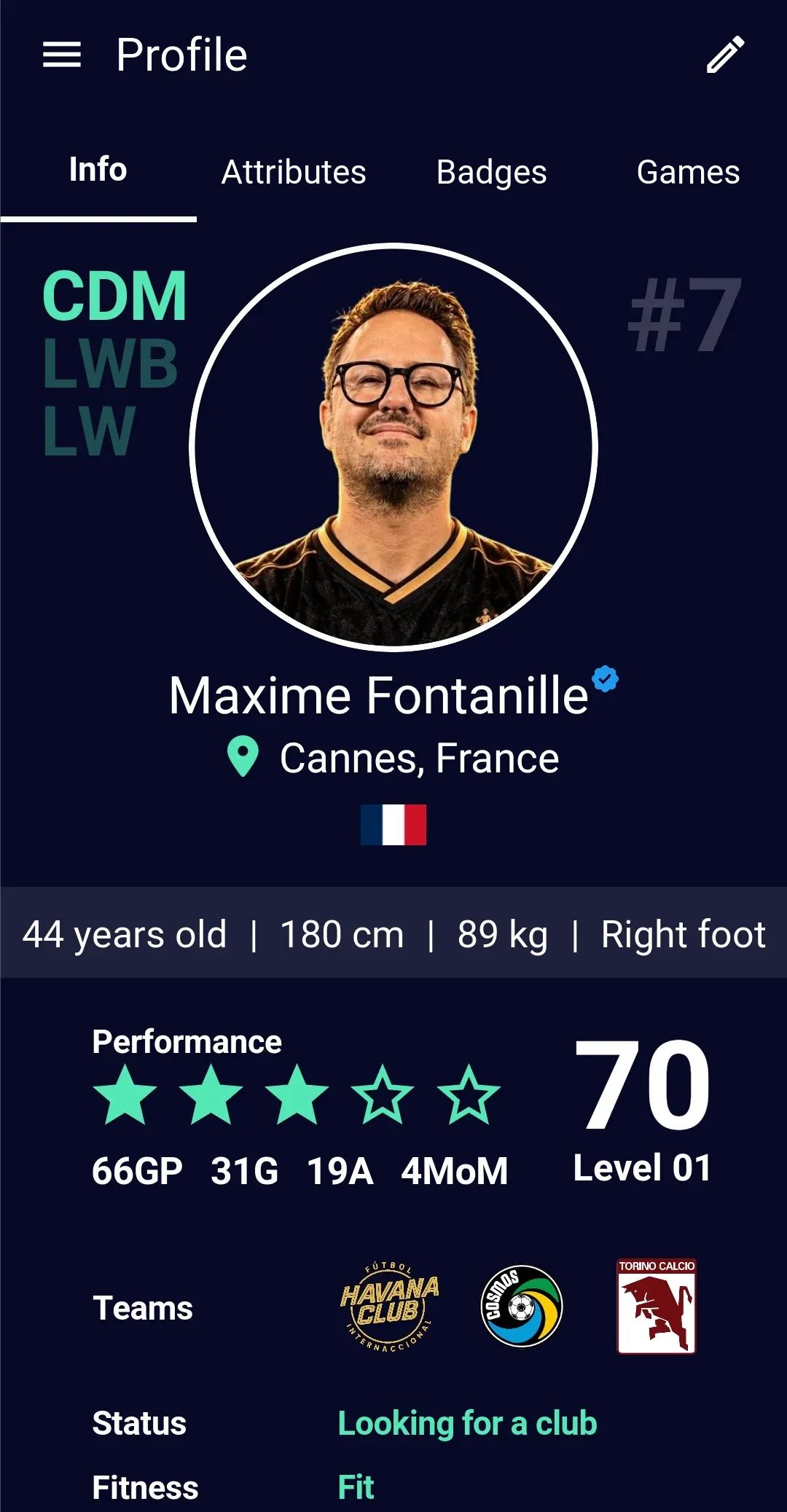
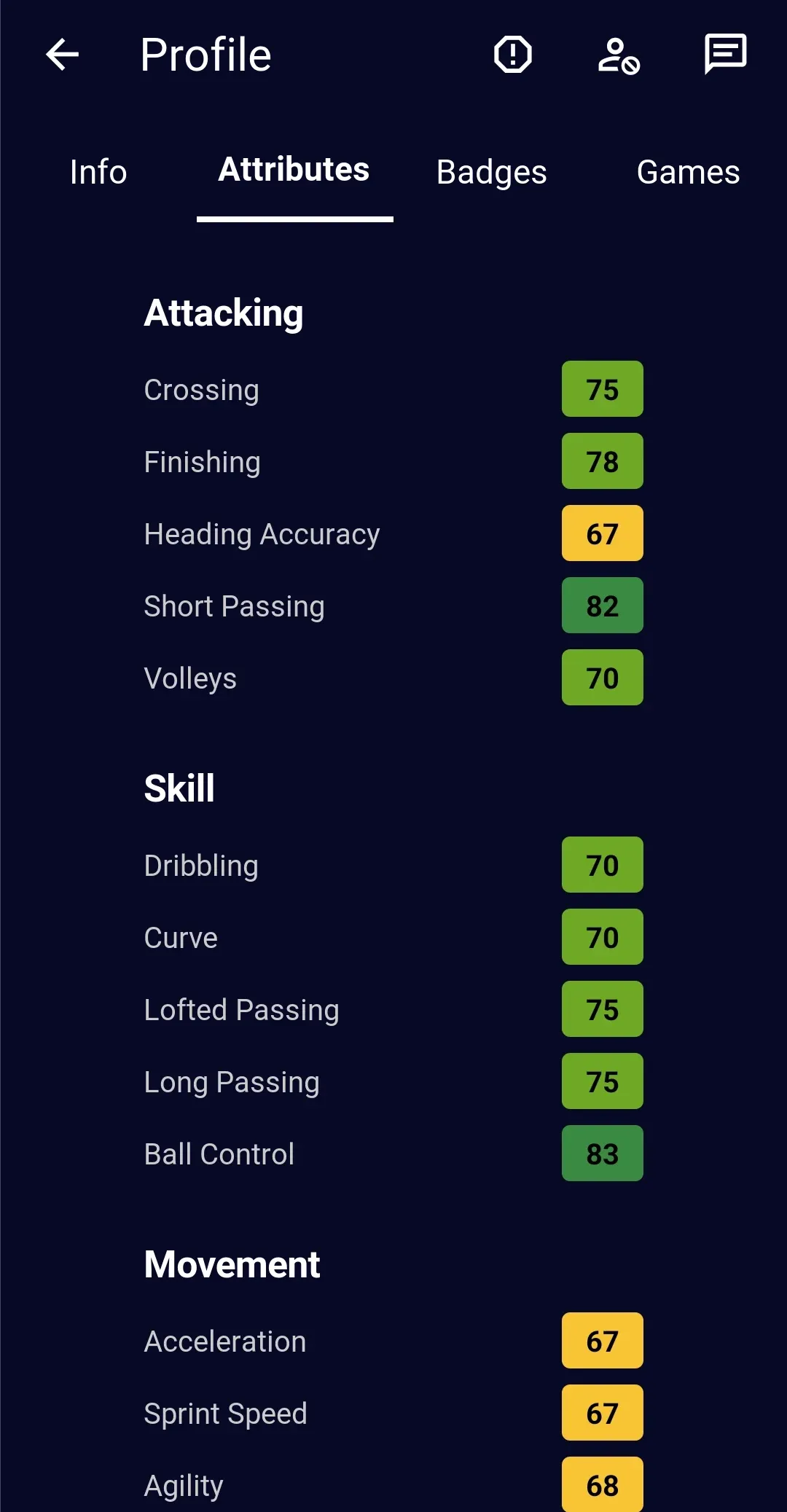
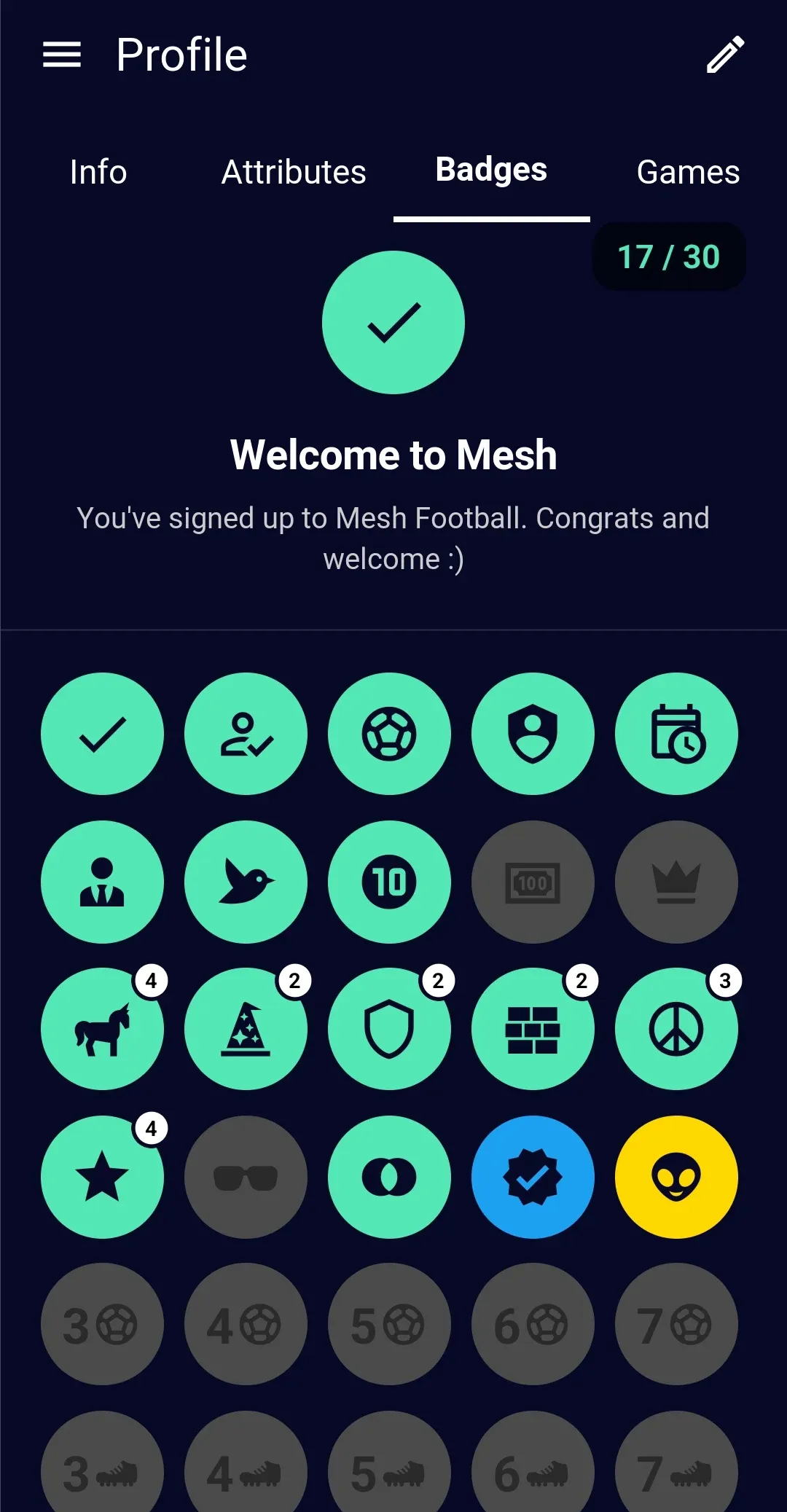
Ratings feed the performance stars on each player’s profile, next to games, goals, assists and Man of the Match awards. Teammates also rate each other on 36 attributes such as finishing, passing, pace and tackling, and there are badges to collect, from a first game to a tenth Man of the Match.
Once voting closes, the app’s match report is updated with the Man of the Match and the awards and posted in the team chat. Reports are written in French for now.
Positive only, by design
Ratings in Mesh Football are there to celebrate good games, not to point at bad ones. Here is how the app keeps it that way, as of the date at the top of this page:
- Taking part is a choice. A player who does not want to be rated can opt out. In Settings, “Take part in game ratings” can be turned off: that player no longer appears in the voting list or on the podium, and does not rate the others either. They still sign up, play and appear in the line-up like everyone else. Attribute ratings have their own switch, “Take part in player assessments”.
- Only the podium is shown. After the vote, the app shows the top three players, without their marks. There is no full ranking, no last place and no “worst player”. The only mark made public is the Man of the Match’s average.
- Nobody is shown who gave which mark. The app displays the podium and the awards, never the individual votes: no screen says who rated whom or who voted for whom.
- Nothing is posted about low marks. The team chat gets the Man of the Match and the match report, and nothing else.
- Every award is a positive one. There is no award for the worst miss, and a special award needs at least three votes, so one person cannot hand one out alone.
- One harsh vote does not decide a mark. When a player has more than six ratings, the highest and the lowest are dropped before the average is taken. The voting screen starts every player at 5.
- Profile stars have a floor. They come from the average of a player’s last five rated games and never show fewer than 2.5 stars out of 5.
- The match report is told not to single anyone out. The AI that writes it is instructed never to name a player negatively and never to quote a low rating. Any criticism is aimed at the team.
- Attributes need shared games, and outliers are refused. You can rate a player’s attributes only after five games together, and again only after a new game with them. A rating far from what the other players gave is rejected. Profiles show averages and the number of raters, never who rated what.
- Abuse can be reported from a player’s profile.
Ratings only work if the game happens. For that part, see how to organise a football game with friends and what a 5-a-side team organiser app should do.
Run your next game with Mesh Football
Free on iOS and Android