How to organise a football game with friends
Written on
Every weekly game has one person who books the pitch, counts heads and finds a tenth player at six in the evening. If that person is you, this guide is the routine that makes the job smaller.
1. Fix the day, the time and the pitch
A game that moves every week loses players every week. Pick one slot and keep it: same day, same kick-off, same pitch. People plan around a fixed game, and “Thursday at 8” becomes a habit rather than a question.
Book the pitch for a block of weeks if the venue allows it. It is usually cheaper, and it removes one decision from every week.
2. Decide the format before you invite anyone
The format tells you how many players you need:
- 5-a-side: 10 players, 12 if you want rolling subs.
- 7-a-side: 14 players, 16 with subs.
- 11-a-side: 22 players, and realistically a squad of 26 or more.
Your squad should be bigger than your game. For a 5-a-side that needs 10, a pool of 15 to 18 regulars means holidays, injuries and late shifts stop being emergencies.
3. Ask for a clear yes or no, with a deadline
Most of the chaos comes from the question, not from the players. “Who’s in?” dropped in a group chat gets thumbs, maybes, jokes and silence, and you end up scrolling to count.
Three rules fix most of it:
- One place for answers. A list where each player is in or out, visible to everyone.
- A deadline. “Answers by Tuesday evening” gives you two days to fill gaps.
- A cap. When the game is full, it is full. A waiting list is fairer than squeezing in a 13th player.

4. Have a plan for the last two places
Someone will drop out on the day. Decide in advance what happens:
- Keep a short list of occasional players who like a late call.
- Let regulars bring a friend as a guest.
- Open the last places to players nearby who are looking for a game.
5. Pick the teams before you get to the pitch
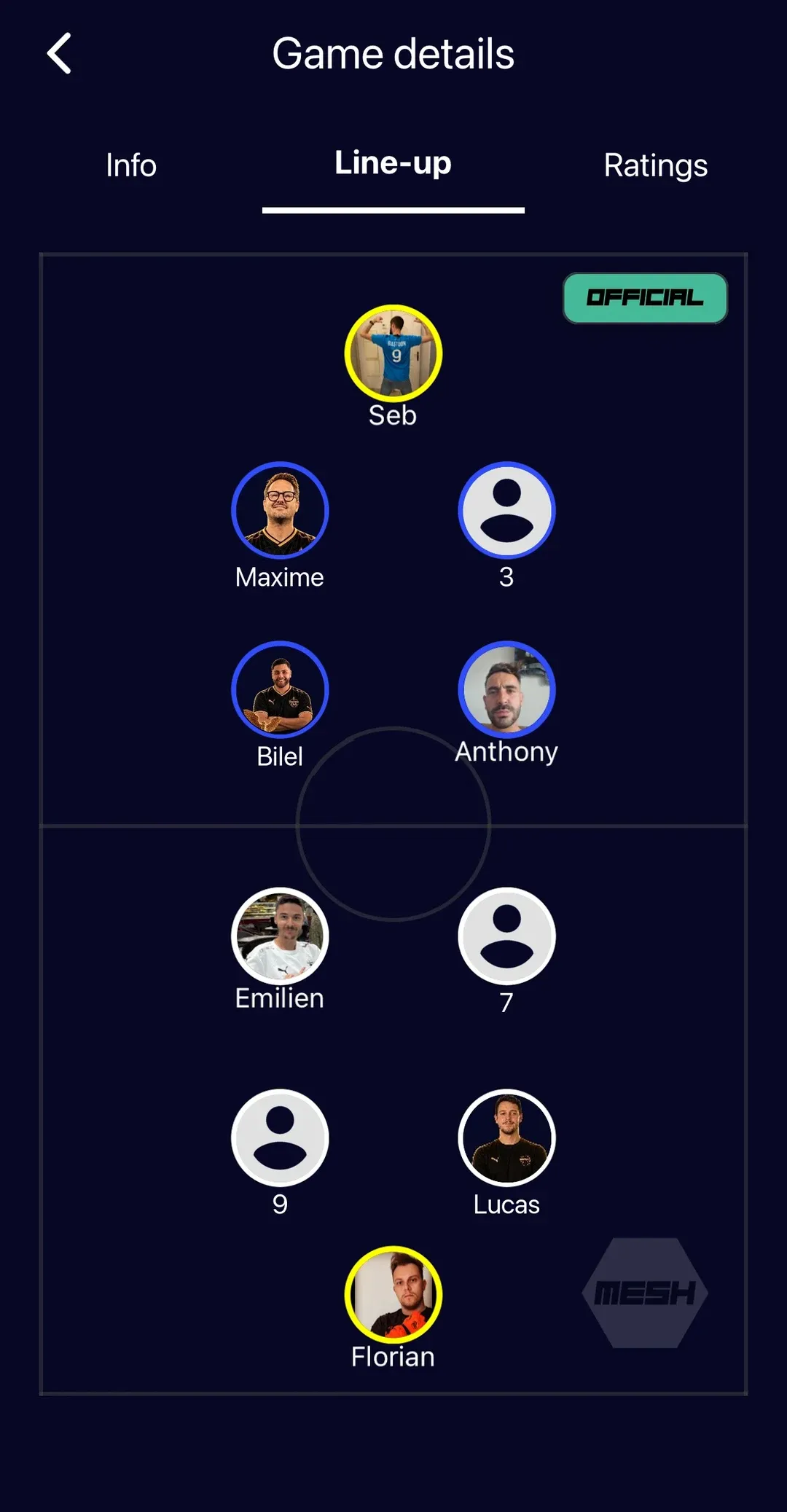
Picking teams at the side of the pitch costs ten minutes of a sixty-minute booking. Set the two sides and the positions beforehand and send them out. People arrive knowing which bib they wear and where they play.
Mix the teams from week to week. Fixed sides turn a friendly game into a league table nobody asked for.
6. Give people a reason to come back
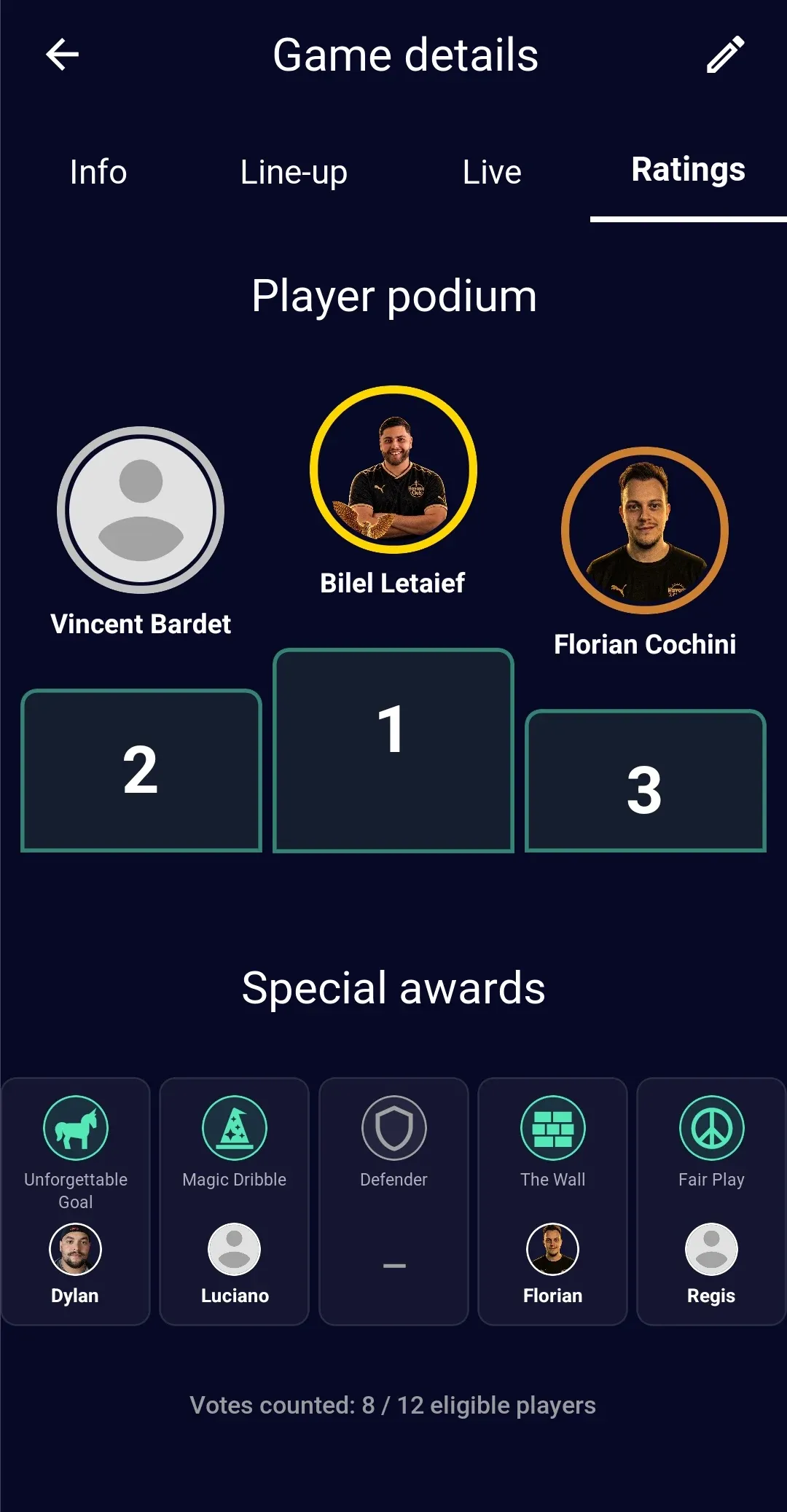
The games that last for years have a memory. Somebody remembers the score, who got the hat-trick and who was best on the pitch. Keeping the score, naming a Man of the Match and writing two lines about the game is enough to make next week feel like a continuation.
Doing all of this in one app
Mesh Football is a free app built around this routine. You create the game with its date, pitch and number of players, and your team gets a notification. Players tap “I’m in”, and anyone without the app can be added as a guest. You drag players onto the pitch to set the line-up, log the goals live, and after the final whistle players rate each other and vote for the Man of the Match.

If you are comparing tools, read what a 5-a-side team organiser app should do. For the part after the final whistle, see player ratings and Man of the Match.
Run your next game with Mesh Football
Free on iOS and Android